


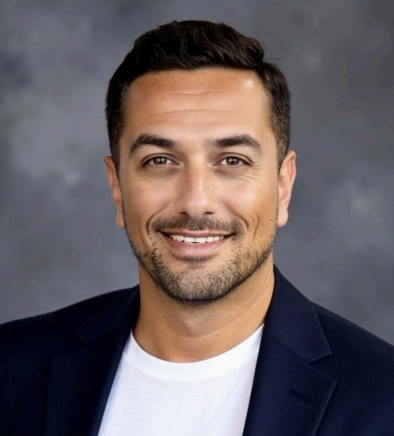
Mark Haley: We’re pleased to have longtime friend and colleague Kareem Taha from White Elephant Resorts join us today. Kareem, I hear it's a beautiful day there on Nantucket Island.
Kareem Taha: Hi, Mark. We finally have some sun. The daffodils are coming out,
and it's getting warm, so we're excited.
M: Let's dive right in. Can you tell us a little bit about White Elephant Resorts?
K: Thank you for having me. White Elephant Resorts is a collection of luxury boutique hotels that started off as one small property at the Wauwinet and started growing.
It was kind of a hobby at first, and then they realized the passion behind the hospitality and welcoming guests and sharing the beauty of this island.
We have the White Elephant in Nantucket, the Wauwinet, a couple of other boutique hotels and the Nantucket Boat Basin, which is the marina on the island
with over 250 slips. About five or six years ago we decided to expand, to bring what made us successful on the island off of the island, to our first flagship White Elephant Palm Beach. And now we are very close to opening White Elephant in Aspen, so we're excited.
M: Nantucket, Palm Beach, Aspen. My guess is that your clientele visits all those places?
K: At first, it just kind of happened to fall that way with Palm Beach. And then we realized it's the same migratory pattern of our guests. People were surprised to see us in Palm Beach and then realized this feels very familiar, yet unique to the area.
M: What is the one thing about White Elephant that distinguishes it from other places you have worked at in your career?
K: I've worked at several different companies, some in tech, many in hospitality. And the one thing I always say, and it's going to sound so cliche, is that it's really like a family. Our president of hospitality, Khaled Hashem, says our focus is to treat our team members the best that we can and give them the tools to succeed. And that will
inevitably translate to the guest experience. And it has. We've won the Boston Globe's top places to work 13 years in a row.
What we see time and time again in the guest comment cards is the relationship guests have with the staff and the service they're receiving. It's what we expect of ourselves that we provide to the guests, and that's been the overwhelming response for why guests keep coming back.
M: The truism holds. If you take care of the employees, they'll take care of the guests.
K: It’s not just a saying here. You walk into any new environment, and everyone has these cultural sayings. Here, they live the culture, all the way from the parent company at the very top down to our team members at the front desk and in housekeeping. Everyone supports each other and wants to see each other succeed, which then translates to the guest having the best experience.
M: How did you get your start in hospitality, and how did you come to Nantucket Island and White Elephant?
K: I grew up in Orlando, Florida. In Orlando you only have a couple of options for jobs. You're either working at a restaurant, a hotel or a theme park. During college, I worked for an Orlando Culinary Academy as an IT specialist, which then translated to becoming a systems administrator. After that, I grabbed a job at Hilton Hotels Walt Disney World.
I got that job as a front desk agent, just work the desk, go to school like any 18- or 19-year-old would do. And I was always into tech. The computers at the desk were restricted. You couldn't do anything but check people in. I figured out a way to unlock solitaire on my computer. My peers wanted it on their computers, too. I got greedy
and unlocked solitaire on all of them. The director of the front office walked out and saw everyone playing solitaire. He laughed, but I got in trouble. That also opened a door. Our director of IT was leaving for a new property and, having seen some things from me, including the solitaire incident, recommended me to be interim director of IT.
That's how I got my start in hospitality technology with Hilton, and the rest is history.
Fast forward nearly 20 years. I got a call from a recruiter about White Elephant. I wasn't interested at first, but they kept going. I said, “Alright, let me just see.” They brought me out here, and it was February. It was cold, dark and windy. And I was like, what am I doing?
But I got to meet Khaled. Everyone I met just made me feel good. I took the leap. Almost 10 years later, I'm still here.
M: What's the most successful technology initiative you've led at White Elephant, and what's next on your roadmap?
K: For me, I wanted to address the fundamentals, the foundation, which is really underpinned by the infrastructure. The thing I'm probably most proud of isn't in front of the guest at all. And that aligns with my vision for tech: it's best when it's not seen, when you don't even know it's working. It was addressing the foundational issues of being on an island 30 miles out to sea. I felt that if we established the infrastructure, we could do anything. Once that was in place, it unlocked all sorts of possibilities and made adding new tech easier. That's probably what I've been most proud of, the underpinning of the tech stack.
And then from the fun side of tech, one of the things I was happy with is something very simple. When you go to a hotel, you grab that weird hospitality remote with the funky buttons that's not intuitive. You want your comforts of home when you visit a hotel.
Hotel companies improved mattresses, linens. Tech got left behind. Comcast figured out how to bring their residential X1 experience into hospitality, and we ended up being the first market in Palm Beach to launch it in the guest room. Voice control, 60,000 on demand movies and shows for free, cloud DVR. And because we're very suite-forward with family clientele, the multi-room DVR was a game-changer. You can start a movie in the living room, pause it and finish it in bed.
M: Where do your best innovation ideas come from, and how do you decide what to pursue?
K: I tend to think about it in terms of what I expect from myself. Once an idea resonates with me, I ask, "How would our guest take this? Is it enhancing the experience, or are we doing it for the sake of doing it?" That barometer, without overthinking it, helps navigate 75% of the decision-making process. Then the fine details, the ROIs and cost of ownership. But it's never about how do we monetize the solution. It's about how do we make the guest experience better. The rest will follow.
M: What's the most pressing technology challenge you're facing right now?
K: It's something I keep noodling over. It's the disparate systems. To do a single task that should be simple has become co-opted by different companies. The total solution involves interfacing with four or five different systems. The core piece in most hotels is the PMS. And because it can't do everything, you end up relying on third parties with different ways of integrating and different data sets.
You're custom-building API interfaces to provide one solution out of many that you need. A standardized hospitality interface that everyone in the marketplace
must follow would make it a lot easier on hotels.
And cybersecurity. The threat is real and we've seen an uptick in breaches across the board. In hospitality, cybersecurity isn't always front of mind and it's not always the thing that gets the most budget approved. It needs to be. Because the first thing a guest asks when they walk in the door is, “What's your Wi-Fi?” You're taking responsibility for that.
M: How are you incorporating AI into your strategy, and where has it made a tangible difference?
K: I feel like I've spent most of the past year and a half talking about AI. For us, as things become more affordable and accessible, everyone wants to focus on luxury markets. I think luxury then becomes service. If we can keep our human touch and personal interaction with our guests, that's going to be the definition of true luxury in the future.
Where AI is very powerful is getting to know your guests better behind the scenes. We get so much data from our guests–personal preferences, travel plans, dislikes, what they eat, and 90% of it doesn't get used effectively to personalize the experience. That's where AI is going to make a real difference, but we still want to talk to every guest, check every single person in.
We don't want people chatting with an AI bot, and there's nothing wrong with that, but I love the feeling of name recognition, someone making eye contact, starting a conversation. Those will get missed with AI in front of the guest.
M: How much does your current tech stack drive your decisions, and what do you look for in a new technology partner?
K: Service. The decision process when choosing a partner comes down to service. I've had situations where Company A has a marginally better product, but their service wasn't great. And Company B: the product isn't shiny, but their team is so committed, just pick up the phone, we'll figure it out. That has been successful for us because just like our guests expect us to proactively guess what the problem might be and fix it instead of being reactionary, we expect the same from our support.
For regular technology decisions, it comes back to two camps. Is it going to make our team better at their job so they can focus on what really matters? Or how does it enrich the guest experience? That's the way we decide on tech.
M: What trends are you seeing in boutique lodging, and how are you adapting your tech focus to stay ahead?
K: It's almost like a golden ratio. How much of the back-of-house workload can AI handle so you can get more people front of house instead of sitting back of house crunching numbers and running reports? In the boutique luxury experience, what I'm seeing trending is that personalized one-to-one experience.
M: Thank you for your time. The readers of Hospitality Upgrade certainly appreciate it as well.
K: Absolutely. Thank you so much.
Interviewed by Mark Haley of Prism Hospitality Consulting.